
Details
Type
- Bachelor Thesis
- Student Project
- Master Thesis
Persons
Description
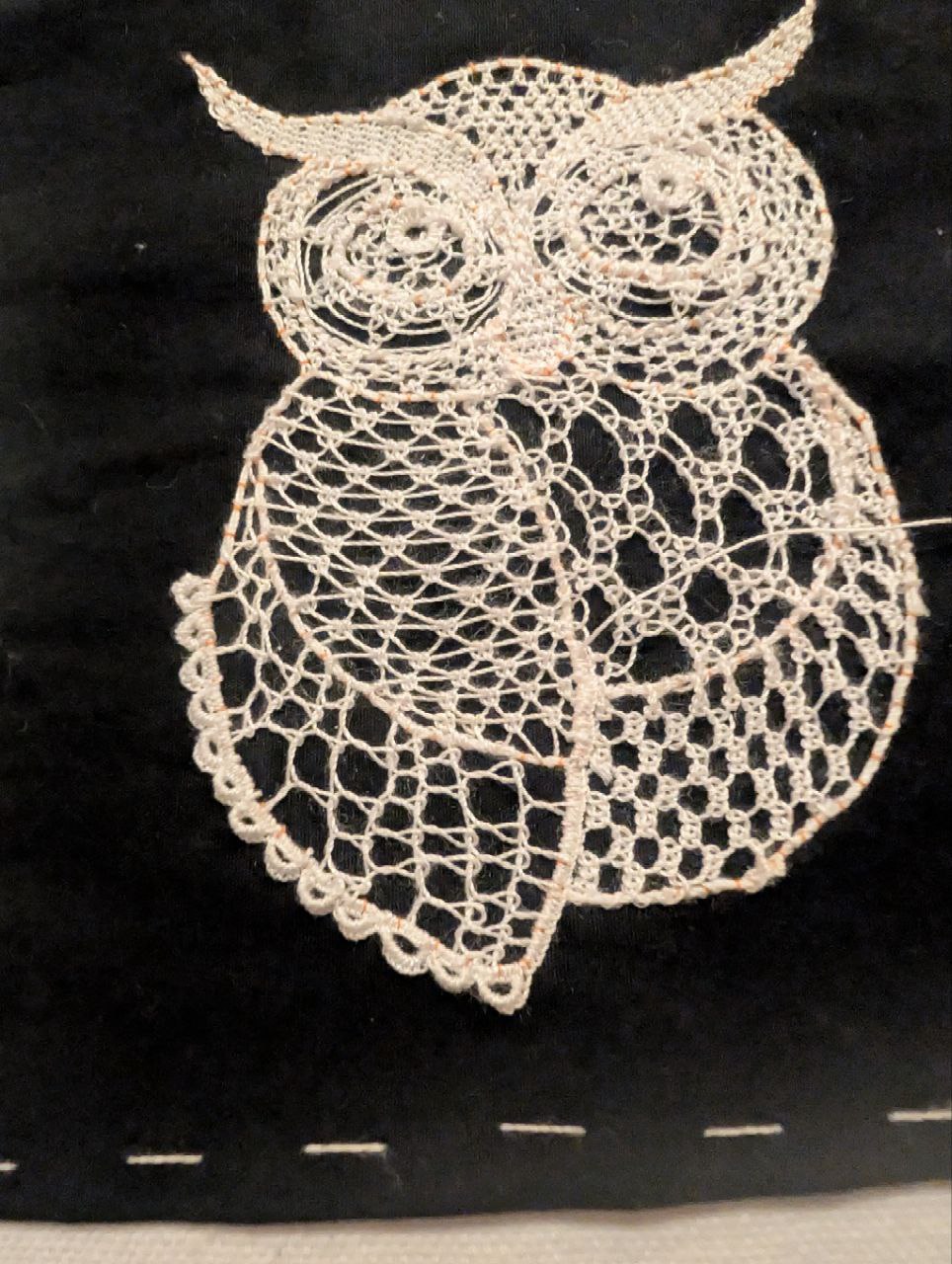
Irish needlepoint lace is a textile craft that emerged in 19th-century Ireland, developed primarily at convents in Youghal and Kenmare. It was taught to women as a means of earning income during periods of economic hardship. The technique traces its roots to Venetian and French needle lace traditions — notably, a nun reverse-engineered existing Italian lace pieces to understand their construction, then adapted the methods into a distinctly Irish practice.
It consists of three steps:
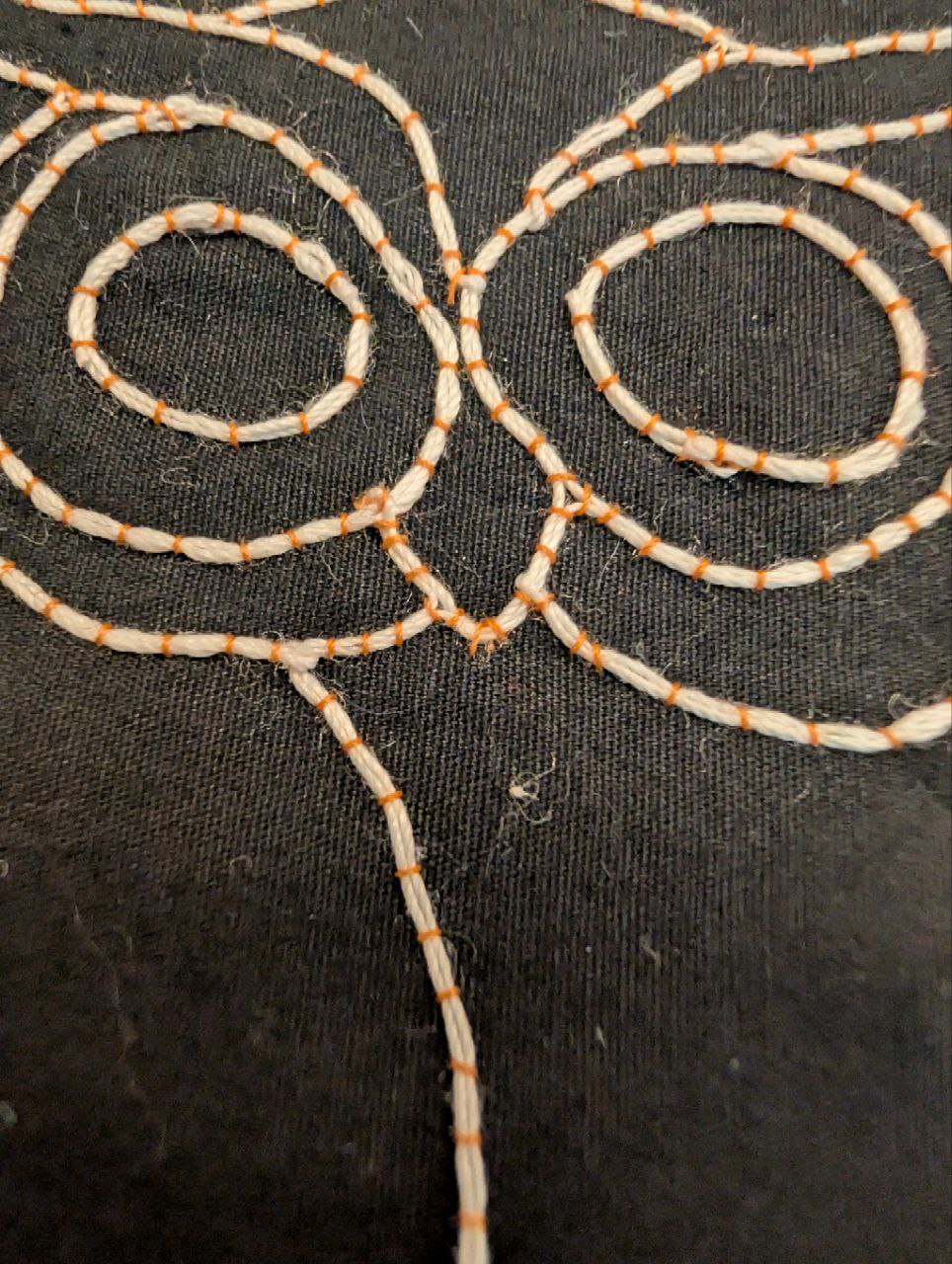
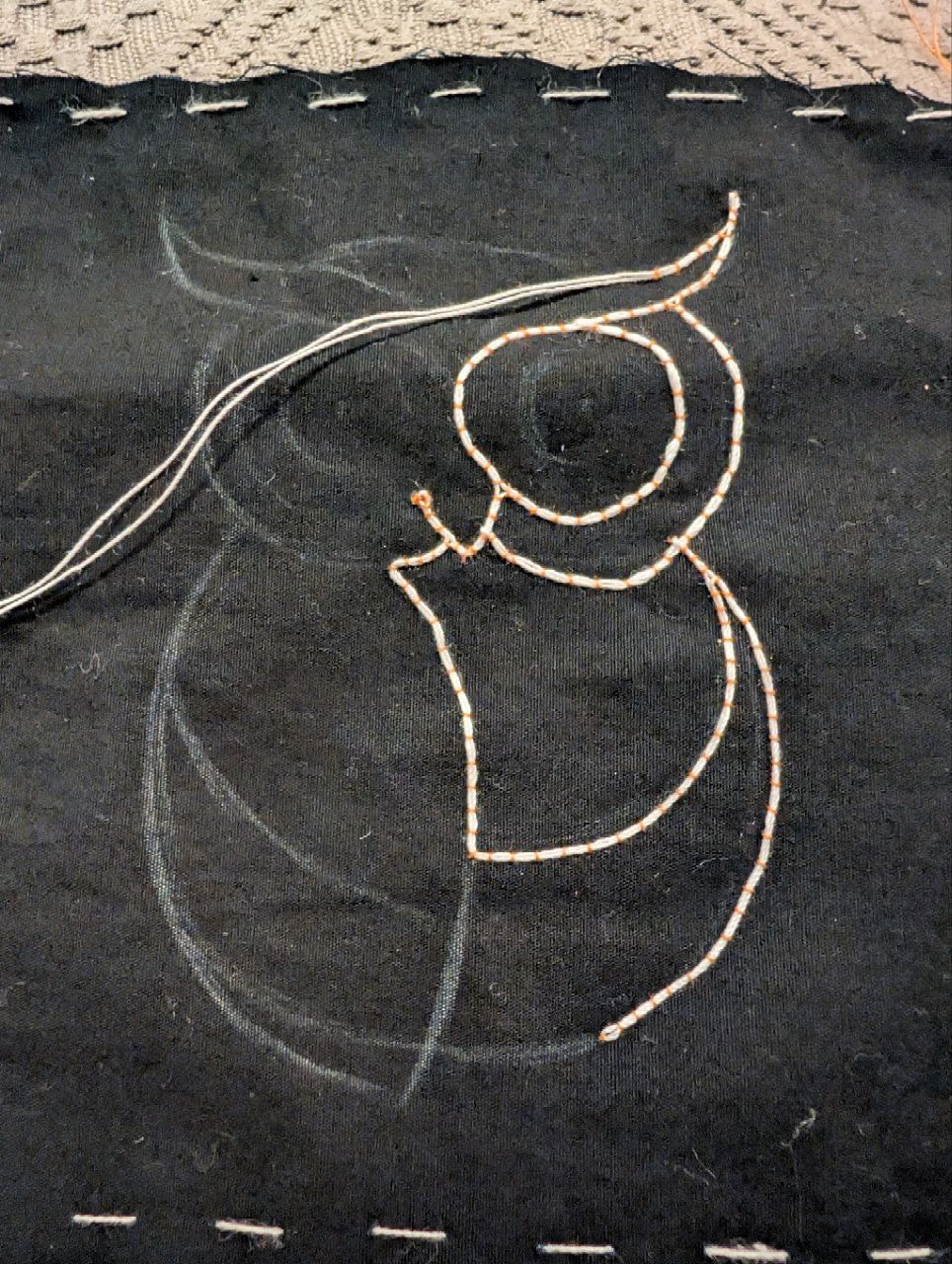
- Outlining with a thicker foundational thread
- Filling in the enclosed areas with a thinner thread in various patterns, mainly based on the buttonhole stitch
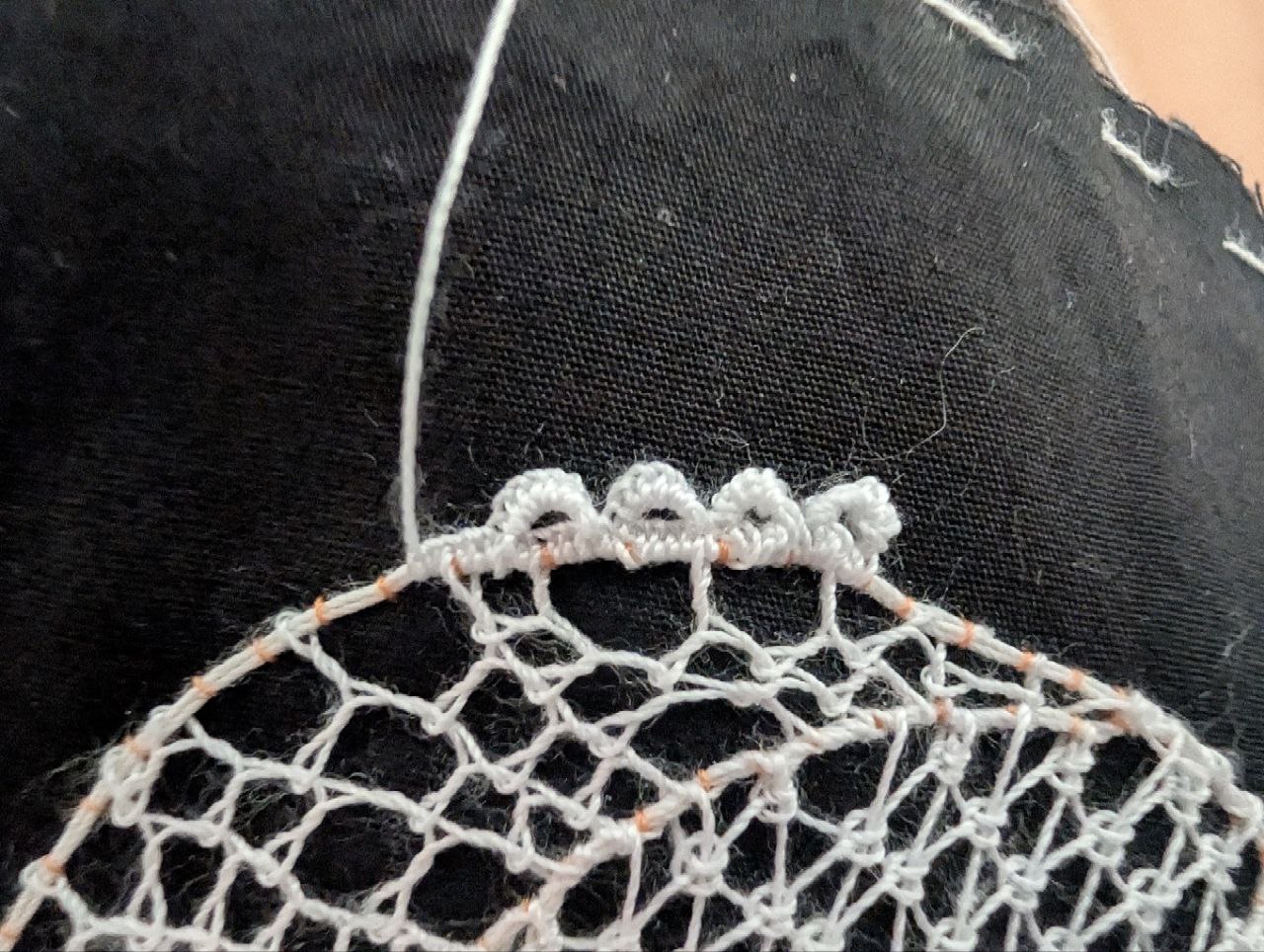
- Bordering the outline with dense buttonhole stitches to fix the filling pattern in place and create visually distinct shapes with crisp outlines, can also contain decorative picots
Afterwards the lace pieces can be fully detached from the working surface/fabric. This is possible as during the first step the thicker foundational thread is not sewn into the working fabric, but only fixed onto it with a thin helper thread. This helper thread in contrast is sewn into the working fabric and in the end it is cut and removed (thus often a contrasting colour is used for better distinction).
Complex outlines are created by using not one but two strands of the thicker outlining thread. The second strand can be used to branch/split if necessary. The first strand is paused, the second branches off and returns again, such that the outline always consists of exactly two strands.
The purpose of this project is to automate the planning for the Outlining step by computing possible paths fulfilling the following constraints:
- The path starts and ends at the same position of the outline.
- There are always two strands along each edge (ie. each edge is covered exactly once).
- Binary splits are strongly preferred (ternery or more is theoretically possible but uncommon).
This relates to finding an Eulerian circuit and the chinese postman problem, but with additional constraints.
Evaluation criteria of different strategies (brute force computations, graph searches such as bfs/dfs, optimization based approaches) could for example be the number of splits, equal thread lengths for both strands, or consistency with hand-crafted solution based on historical pieces.
Tasks
Develop an application with the following pipeline:
- Construct a curve/vector graphics representation of the outline based on a sketch or photograph.
- Extract a graph representation (to construct the path we do not need to consider curves anymore, only the intersection points and corners or points of C0 continuity where the outline changes direction sharply).
- Implement and compare different traversal methods for this graph representation with respect to the constraints above.
- Optionally report if an outline cannot be traversed, which edges/parts are problematic and give suggestions on how to adapt, to allow for an interactive drafting experience for the user.
Requirements
- Any programming language (C++, Python...)
- Knowledge or interest to learn about existing graph theory and traversal algorithms (breadth/depth first search, Eulerian graphs, ...)
Environment
The project should be implemented as a standalone application, desktop or web-based (to be discussed).
Additional Images and Files
| Attachment | Size |
|---|---|
| Finished Outlining | 288.44 KB |
| Outlining | 334.55 KB |
| Border with decorative picots | 282.74 KB |